

Cloud & S/4HANA Migration Pressure for Finance Leaders
Why staying on legacy ERP is becoming a strategic risk — not a safe choice

The Silent Deadline Facing Finance
Across industries, finance organizations are confronting a reality that can no longer be postponed: legacy ERP systems are reaching the end of their strategic usefulness. Rising infrastructure costs, shrinking talent pools for outdated platforms, regulatory complexity, and SAP’s clear roadmap toward S/4HANA are converging into one unavoidable pressure — modernize or fall behind.
Cloud-enabled S/4HANA is no longer a “digital transformation initiative.” It is rapidly becoming the operating standard for competitive finance organizations.
What was once a multi-year optional roadmap is now a near-term business necessity.
The Forces Driving Migration Urgency
1. Legacy Systems Are Cost Centers, Not Enablers
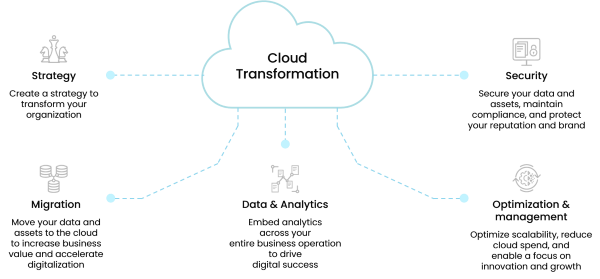
In today’s enterprise landscape, legacy SAP ECC environments have increasingly shifted from being strategic business enablers to operational cost centers. Organizations running traditional on-premise systems are burdened by rising infrastructure overheads, escalating costs associated with highly customized landscapes, prolonged release and upgrade cycles, and limited access to real-time operational and financial insights. The cumulative effect is a steady increase in IT spend while business agility and responsiveness continue to decline.
2. The Strategic Direction of SAP Is Clear
SAP’s strategic roadmap makes the future direction unmistakably clear. The company’s innovation investments are now firmly centered on S/4HANA Cloud and Private Cloud editions, with a strong emphasis on embedded analytics, AI-driven process automation—particularly within finance—and continuous innovation through regular releases. As a result, ECC environments are no longer evolving at the same pace and are effectively entering a phase of functional stagnation, with fewer enhancements and diminishing long-term value.
3. Finance Expectations Have Changed
At the same time, the role of finance within modern organizations has fundamentally transformed. Finance teams are now expected to operate in real time, enabling faster period closes, predictive forecasting, instantaneous compliance and regulatory reporting, and advanced scenario modeling to support strategic decision-making. Legacy batch-driven processing models and fragmented data architectures simply cannot sustain these expectations, creating a growing gap between business demands and system capabilities.
Why Cloud + S/4HANA Is the New Finance Core
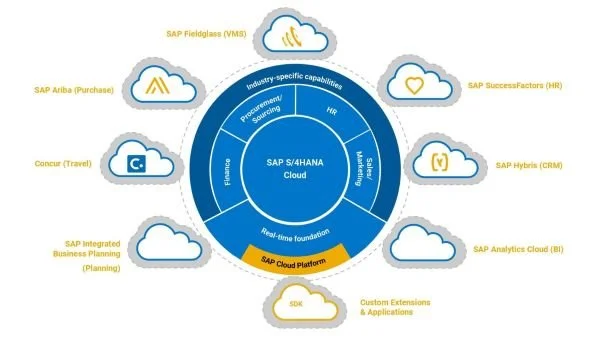
Finance organizations have long relied on legacy ERP systems to manage transactions, reporting, and compliance. These systems, often built decades ago, were designed for batch processing and siloed data storage. While they served well in their time, modern finance demands agility, real-time insights, and the ability to respond quickly to business changes. Traditional on-premise systems struggle to meet these expectations, creating inefficiencies and slowing decision-making.
S/4HANA introduces a simplified data model that eliminates redundancies and aggregates, allowing finance teams to access real-time transactional and analytical data from a single source. This breakthrough transforms reporting and analytics, enabling instant financial insights, faster period-end closings, and predictive capabilities that go beyond traditional finance operations. The embedded compliance and control features also ensure that organizations maintain regulatory standards without relying on complex manual processes.
Deploying S/4HANA on the cloud adds a new dimension of flexibility and scalability. Cloud infrastructure removes the constraints of physical hardware, reduces IT maintenance costs, and enables seamless updates. Finance leaders can access their systems from anywhere, at any time, and scale resources according to business needs. The cloud also supports integration with advanced technologies, such as artificial intelligence and machine learning, providing finance teams with the tools to automate routine tasks and focus on strategic decision-making.
Real-Time Insights and Business Agility
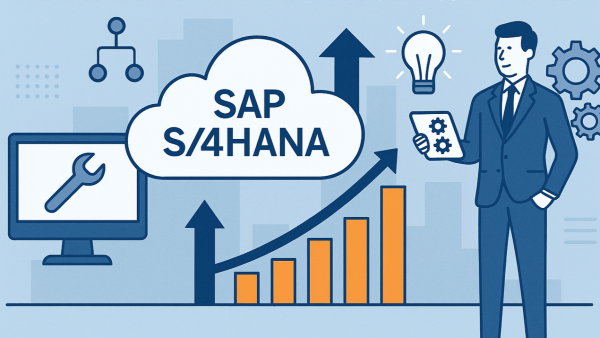
Combining S/4HANA with cloud capabilities empowers finance to become a true business partner. Real-time visibility into cash flows, budgets, and forecasts allows leaders to make faster, data-driven decisions. This agility not only improves operational efficiency but also enables finance teams to support enterprise-wide initiatives, from mergers and acquisitions to market expansion, with confidence.
The convergence of S/4HANA and cloud technology establishes a finance core that is resilient, intelligent, and adaptable. Organizations can leverage predictive analytics, scenario modeling, and continuous monitoring to anticipate challenges before they arise. This future-ready finance core positions companies to thrive in an increasingly dynamic business environment, transforming finance from a back-office function into a strategic growth driver.
The Hidden Risks of Delaying Migration
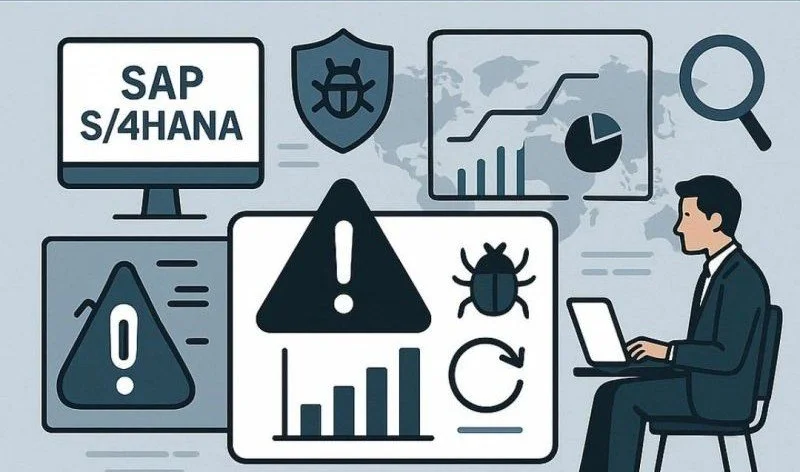
Many organizations cling to SAP ECC in the name of stability, assuming that keeping existing processes and infrastructure intact minimizes risk. In reality, this mindset often creates greater, less visible vulnerabilities over time. Legacy ERP environments may feel “safe,” but their quiet erosion of competitiveness is insidious and cumulative.
As ECC landscapes age, maintenance and support costs steadily rise. Customizations that once delivered business advantage become burdensome, locking the organization into rigid, outdated processes and inflating the cost of even minor changes. Security vulnerabilities grow, as ECC no longer receives full support, leaving critical financial, operational, and HR data exposed to threats that modern ERP systems like S/4HANA are designed to mitigate automatically.
The impact extends to business agility and performance. Financial reporting slows, analytics lag behind real-time operations, and strategic decision-making suffers. At the same time, the ability to adopt AI, automation, and predictive analytics — capabilities increasingly embedded in S/4HANA — remains out of reach. Organizations that delay migration risk losing ground to competitors who can act faster, innovate more freely, and optimize processes end-to-end in real time.
Human capital challenges further compound the problem. ECC expertise is becoming increasingly scarce, as the workforce shifts toward cloud and S/4HANA skills. Recruiting and retaining talent to maintain an outdated ERP environment becomes expensive and difficult, while internal teams struggle with a system that doesn’t fully support modern business needs.
What may feel like cost avoidance today — postponing your S/4HANA journey — often becomes crisis-driven migration tomorrow, executed under time pressure, at significantly higher expense, and with greater operational disruption. Proactive migration, by contrast, allows organizations to simplify their data models, embed intelligent automation, enhance reporting, strengthen compliance, and scale operations in the cloud — all while protecting long-term competitiveness.
In today’s fast-moving digital economy, stability comes not from resisting change but from evolving with it. For SAP customers, the real risk lies in standing still on ECC — and the cost of delay grows with every day that passes.
Common Migration Paths Finance Leaders Are Choosing
Most organizations adopt one of the three strategic approaches:
Brownfield (System Conversion)
Finance leaders often start with a system conversion, moving their existing ECC environment directly to S/4HANA on-premise. This path preserves current processes but modernizes the underlying technology.
Why Leaders Choose It: Minimizes disruption, keeps familiar workflows, and allows gradual adoption of S/4HANA innovations.
Key Considerations: Requires careful data migration, system cleanup, and potential code adjustments. Strong foundation for future cloud adoption.
Greenfield (New Implementation)
This approach involves building a new system from scratch, redesigning finance processes for modern best practices rather than lifting legacy structures.
Why Leaders Choose It: Opportunity to streamline and automate finance operations, eliminate legacy constraints, and embed AI and analytics from day one.
Key Considerations: Higher initial effort and cost, but provides a clean slate for process standardization and transformation.
Landscape Optimization (Selective Transformation)
Some finance leaders prefer a hybrid approach, migrating core finance processes to S/4HANA while keeping certain legacy or non-critical systems active temporarily.
Why Leaders Choose It: Balances innovation with stability, reduces immediate operational risk, and allows phased adoption.
Key Considerations: Requires robust integration strategy and clear roadmap for eventually retiring legacy components.
Preparing for a Successful Transition
Before migration begins, finance leaders should focus on:
Assessment of the Current ECC landscape
Transitioning from SAP ECC to S/4HANA, combined with a move to the cloud, represents one of the most significant technology and business transformations an organization can undertake. The process is not merely a system upgrade but a strategic opportunity to modernize finance, operations, and business processes while enabling agility, scalability, and advanced analytics. Successful preparation begins with a thorough assessment of the current ECC landscape. This includes understanding customizations, integrations, data structures, and user workflows. Identifying legacy processes that no longer deliver value is critical, as S/4HANA provides a chance to standardize and simplify operations, reducing complexity and technical debt.
Data Readiness
Ensuring that master data and transactional data are clean, accurate, and aligned to new S/4HANA requirements prevents downstream errors and maximizes the effectiveness of automation and reporting. Migration tools and data validation strategies should be evaluated early, with attention to harmonizing data across disparate systems to support unified reporting and analytics in the cloud environment. Alongside data preparation, defining a clear migration path—whether brownfield, greenfield, or selective data transition—shapes the project timeline, resource allocation, and risk management. Each approach has implications for process redesign, user training, and system downtime, so executive sponsorship and cross-functional alignment are critical to making informed decisions.
Organization Readiness
S/4HANA and cloud adoption demand new skills, both technical and functional. Finance and operations teams must understand the new interfaces, embedded analytics, and automation capabilities. Change management initiatives should be tailored to different user groups, highlighting the benefits of faster reporting, enhanced decision-making, and more efficient workflows. Engaging stakeholders early, providing hands-on training, and creating champions across departments helps build confidence and reduces resistance to change.
Testing, Governance & Risk Mitigation
End-to-end testing ensures that business processes function as intended, while performance benchmarks validate system scalability in the cloud environment. Security and compliance considerations must be embedded from the outset to safeguard sensitive financial and operational data. By combining meticulous technical preparation, organizational readiness, and governance, businesses can transform the ECC-to-S/4HANA migration into a catalyst for operational excellence, innovation, and long-term competitive advantage, rather than just a technology project.
Conclusion
The shift from IT-driven roadmaps to business-driven priorities has transformed Cloud and S/4HANA migration into a strategic imperative. Organizations are no longer evaluating migration as a purely technical project; the drivers now include business agility, cost efficiency, compliance with regulatory requirements, the need for data-driven decision-making, and alignment with SAP’s innovation roadmap. For finance functions, this change reframes the discussion from debating whether to migrate to focusing on how quickly modernization can be achieved without disrupting core operations. Migration is increasingly about enabling finance teams to operate with speed, intelligence, and resilience, while leveraging real-time insights and scalable digital processes.
Companies that act proactively position themselves to reap significant competitive advantages, including faster financial reporting, improved operational efficiency, and the ability to adapt rapidly to changing market conditions. Conversely, organizations that delay modernization face mounting risks: they will eventually be forced to migrate under more constrained timelines, with fewer options, higher costs, and greater disruption to business operations. In essence, the pace and strategy of S/4HANA migration have become a defining factor in finance-led business transformation, determining which organizations will thrive in an increasingly dynamic, data-driven environment.
ERPfixers stands as your beacon of reliable SAP expertise, ready to transform the promise of the SAP Business Suite Acceleration Program with Microsoft Azure into your business reality.
Our team of top-tier thought leaders and seasoned SAP consultants possess unparalleled knowledge across core SAP modules, S/4HANA, and analytics, providing the customized, flexible guidance needed to seamlessly integrate these cutting-edge capabilities and build a future-ready, insight-driven finance function.
Whether you're optimizing existing SAP environments on Azure, preparing for an S/4HANA migration, or leveraging embedded AI, ERPfixers can help you navigate this evolution with confidence.
Partner with ERPfixers to unlock your business's full potential and drive sustainable growth.
📧Send us an email info@erpfixers.com
📱Call us at (207) 573-0486 Ext 800