Multi-Currency, Multi-Valuation: Costing Materials for Global Manufacturers in S/4HANA
How Material Ledger, Parallel Valuation and Universal Parallel Accounting let one material carry the right cost in every currency, every entity and every accounting view.
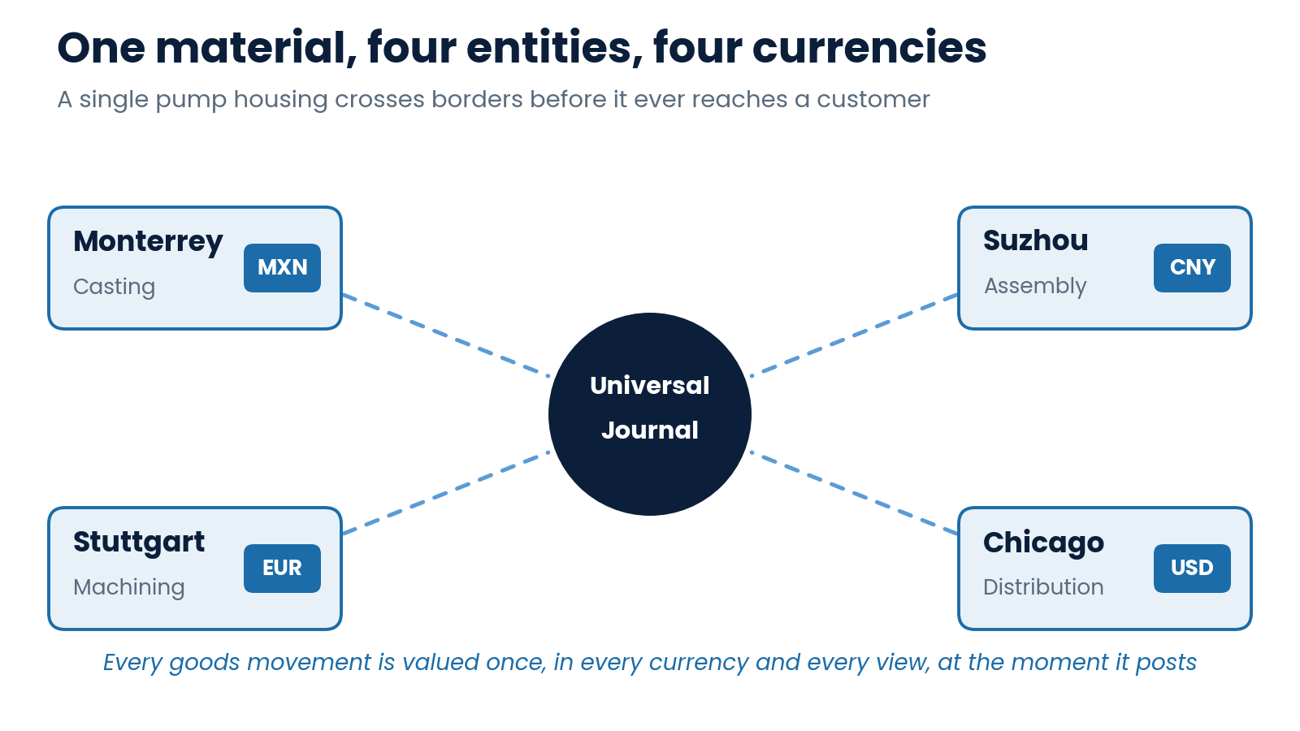
A pump housing is cast in Monterrey, machined in Stuttgart, assembled in Suzhou and sold out of a distribution center in Chicago. By the time it reaches a customer it has crossed three borders, four currencies and at least two sets of accounting rules.
The plant controller in Mexico wants its cost in pesos. The German statutory auditor wants it in euros under local GAAP. Group finance wants it in US dollars, at cost, with every intercompany margin stripped out. And the profit center manager in Stuttgart wants to know whether the machining operation actually made money on the transfer.
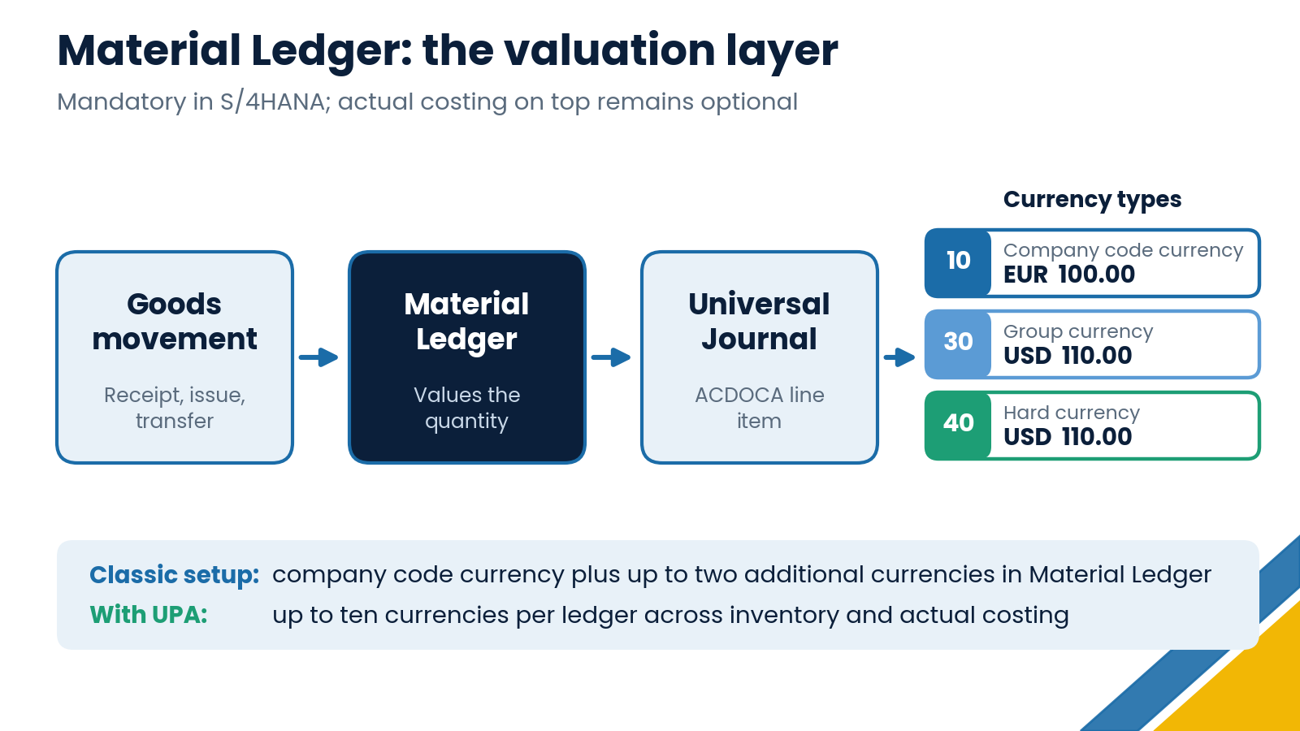
In most legacy ERP landscapes those four answers come from four different places: the ERP system, a spreadsheet, a consolidation tool and somebody's memory. SAP S/4HANA was designed to collapse them into one posting. This article explains how multi currency and multi valuation costing works in S/4HANA today, what changed with Universal Parallel Accounting (UPA), and which decisions global manufacturers should make before they configure a single currency type.
Why Global Manufacturers Need More Than One Number
Exchange rate swings, tariff driven sourcing changes and constant supply chain reshuffling have made one thing very clear for manufacturing finance teams: the cost of a material is not a single number. It depends on who is asking, and in which currency. A global manufacturer typically needs three valuation views running side by side:
· Legal valuation: what each legal entity reports under its local GAAP, including any intercompany profit it paid for at transfer price.
· Group valuation: what the material actually cost the corporate group as a whole, with intercompany margins eliminated.
· Profit center valuation: what the material cost when measured at internal transfer prices between profit centers, so each manager's performance is visible.
Then multiply each view by the currencies you need: company code currency, group currency, and often a hard or index currency for operations in high inflation economies. Without a system that captures all of these at the moment of the goods movement, finance teams end up rebuilding them at month end. Rebuilding is where margins get distorted, where profit in inventory is estimated instead of calculated, and where exchange rate effects quietly hide inside cost of goods sold.