

THE 5 ENTERPRISE AI TRENDS DEFINING 2026
Artificial intelligence is no longer an experimental add-on. It is rapidly becoming the operating core of the modern enterprise.
Artificial intelligence is rapidly evolving from a collection of powerful tools into a foundational pillar of the modern enterprise. Specialized models, intelligent agents, and AI-native architectures are embedding AI directly into the core of business operations—unlocking transformative gains in speed, intelligence, and efficiency.
The critical question is no longer what AI can do, but rather:
How do we design our organizations to succeed with AI?
How do we build for it?
Which problems should be solved with which models?
How do we govern systems that increasingly act autonomously?
The next era of AI will be driven by deep integration with enterprise data.
Rather than relying on generic public knowledge, modern AI systems will ground intelligence in transactional records, operational workflows, and real business context — enabling accurate predictions, automation, and decision-making across the organization.
Enterprise platforms such as SAP are already embedding AI directly into core business systems, turning ERP, finance, and supply chain data into real-time intelligence.
This shift unlocks faster forecasting, smarter automation, and insight-driven operations at scale.
In 2026, five defining themes will shape the future of enterprise AI—bringing both unprecedented opportunity and new operational complexity.
1. Specialized Foundation Models Redefine Enterprise AI
Generative AI’s early momentum was driven by large language models trained on massive volumes of public text. These models enabled breakthrough applications such as document summarization, code generation, and conversational interfaces.
The next wave will be powered by specialized foundation models—designed for specific domains and data types.
In 2026:
Physics-grounded models will power simulation and digital twins
Vision-language-action models will translate knowledge into real-world robotics
Structured-data models will transform forecasting, risk scoring, anomaly detection, and optimization
Unlike traditional machine learning, these models learn directly from enterprise tables and transactions—delivering predictive performance in days rather than months.
They will become the unseen engines behind finance automation, intelligent supply chains, manufacturing optimization, and ERP intelligence.
2. The Rise of AI-Native Architecture
AI-native architecture brings together continuously learning intelligence layers with context-rich knowledge graphs, enabling agent-driven workflows that operate seamlessly through natural language and multimodal interactions.
Instead of static processes, systems become adaptive, intent-driven, and self-improving.
This approach—often referred to as neurosymbolic AI—combines probabilistic learning with deterministic business rules, ensuring both intelligence and governance.
Future ERP platforms will move beyond passive transaction processing to proactively detect anomalies, recommend intelligent actions, execute workflows autonomously, and continuously enforce compliance with policies and regulatory requirements.
3. Managing AI Agents as a Digital Workforce
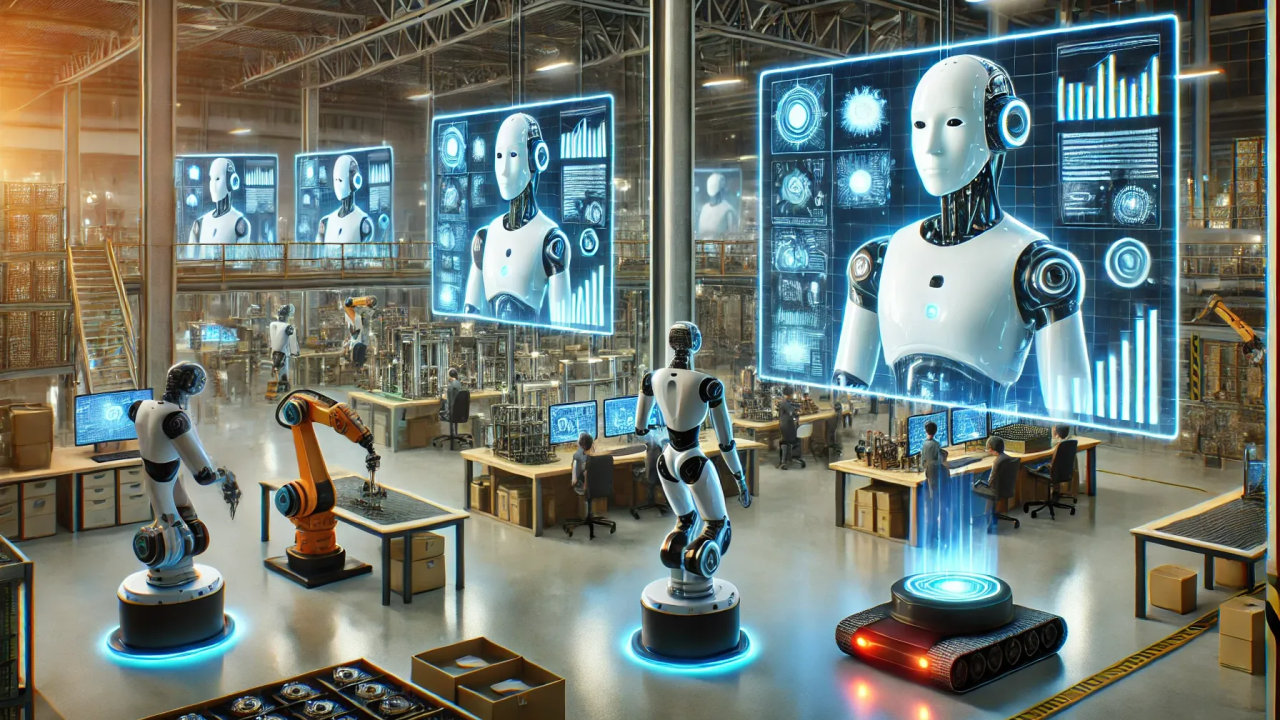
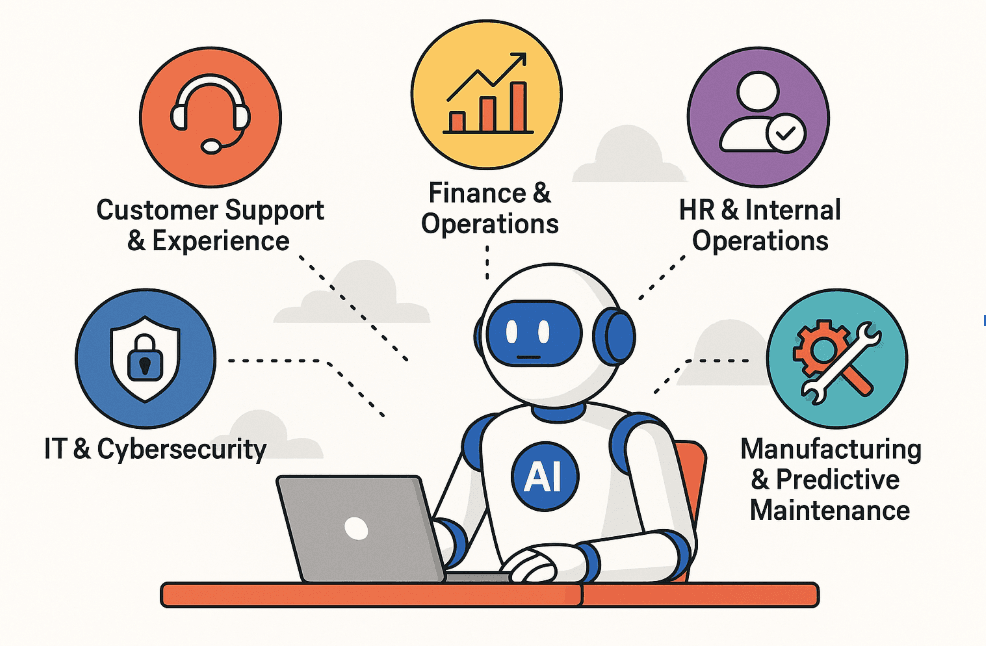
The emergence of autonomous AI agents represents a pivotal shift in how enterprises operate. These systems are rapidly evolving to manage complex, multi-step business processes, interpret and validate documents for compliance, optimize operational planning, and automate workflows across multiple systems.
However, with greater autonomy comes the need for structured control. Leading organizations will establish robust agentic governance frameworks that ensure strong security and lifecycle management, full transparency and auditability, consistent policy enforcement, meaningful human oversight, and continuous performance measurement.
In practice, AI agents will function much like digital employees — actively supervised, continuously improved, and governed with the same rigor applied to any critical workforce.
4. Intent-Driven ERP and Generative User Experiences
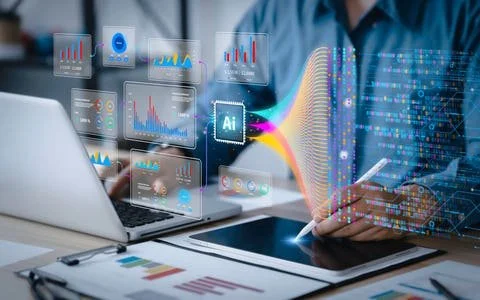
The next generation of enterprise software will be driven by intent rather than menus and navigation. Instead of moving through multiple applications, users will express objectives directly — such as preparing a customer visit with priority sales opportunities, forecasting supply risks for the coming quarter, or optimizing inventory across regions — and intelligent systems will take it from there.
AI agents will automatically gather the right data, perform advanced analysis, generate visual insights, and execute end-to-end workflows. At the same time, generative interfaces will assemble real-time dashboards, reports, applications, and recommendations on demand.
Traditional screens and applications won’t vanish, but they will become just one of many interaction layers through which humans and AI collaborate. The outcome is a radically more productive enterprise environment, faster user adoption, and highly personalized digital experiences.
5. Sovereign AI Reshapes the Enterprise Cloud

Geopolitical changes and growing concerns around digital sovereignty are reshaping how enterprises deploy AI. Today, sovereignty extends beyond simple data storage to include data residency and security standards, jurisdictional authority, AI model provenance, and control over infrastructure.
As a result, organizations are increasingly seeking AI platforms that are advanced, compliant, regionally governed, and fully secure. This represents a move away from uniform, global cloud solutions toward sovereign, AI-powered enterprise ecosystems. Governments are expected to continue investing across the AI stack, fostering localized innovation while maintaining strategic oversight.
Final Thoughts: The AI-Native Enterprise with SAP at the Core
By 2026, artificial intelligence will no longer function as a supporting technology layer — it will become a core operating pillar of the modern enterprise. Leading organizations will move beyond isolated AI use cases and instead embed intelligence directly into their business processes, data platforms, and enterprise systems.
With SAP at the center of enterprise operations, this shift is already underway. SAP’s evolution toward AI-native ERP, embedded analytics, intelligent automation, and business-context-driven AI is enabling organizations to transform how finance, supply chain, HR, and operations run in real time.
The enterprises that succeed will be those that:
Build AI-native business platforms rather than layering AI onto legacy systems
Leverage specialized AI models designed for structured enterprise data and real operational use cases
Establish strong governance frameworks to manage autonomous AI agents as a digital workforce
Enable intent-driven, generative user experiences across ERP and business applications
Invest in harmonized, high-quality enterprise data as the foundation of intelligence
The true competitive advantage will not come from access to AI alone, but from the ability to integrate intelligence deeply, securely, and strategically across the SAP landscape.
AI performs best when powered by connected, contextualized business data. Without modern cloud platforms such as SAP S/4HANA and unified data architectures, even the most advanced AI capabilities will underdeliver.
Organizations that modernize their SAP environments now will lead with speed, insight, automation, and resilience.
Those that delay will face compressed timelines, higher transformation risk, and competitive pressure to catch up.
ERPfixers stands as your trusted beacon of reliable SAP expertise—founded to bridge the gap for those seeking skilled, immediate, and high-quality SAP solutions.
Our team is composed of top-tier thought leaders and seasoned consultants specializing across all major SAP modules, with particular strength in Financials and Controlling (FI/CO) in S/4HANA. Many of our experts are also published authors on key SAP topics.
We provide tailored, actionable guidance to help you optimize processes, streamline implementations, and transform complexity into competitive advantage.
Don’t let SAP challenges slow your transformation. Partner with ERPfixers to make your SAP landscape more agile, efficient, and future-ready.
📧info@ERPfixers.com
📱+1 (207) 573-0486 x 800
▶️Follow us on LinkedIn